02Amazon Business · UI/UX Design · 3 Months
Preferred Brand Recommendation Ads
Intelligent recommendation ads inside the guided buying workflow — helping business customers make informed, confident purchasing decisions while improving discoverability for sellers.
The Problem
Brand selection was a guessing game.
The Amazon Business Ads team identified several critical issues:
- Customers found the guided buying policy setup "wasn't user friendly" and explicitly requested UX improvements.
- Of 2 million active policies, only ~10% were associated with Preferred Brand policies.
- Business buyers wanted better discovery — to "see related brands and brands preferred by others," with ratings and product information displayed comparably.

User Pain Points
One brand at a time, one tab at a time.
"I have to type the brand name and search them one by one — there are no recommendations."
Buyers were opening multiple browser tabs to manually compare brand information, and repeatedly expressed a desire for AI-driven recommendations that could anticipate their needs instead of making them do the digging.
Process & Solution
A lightweight widget, a heavyweight improvement.
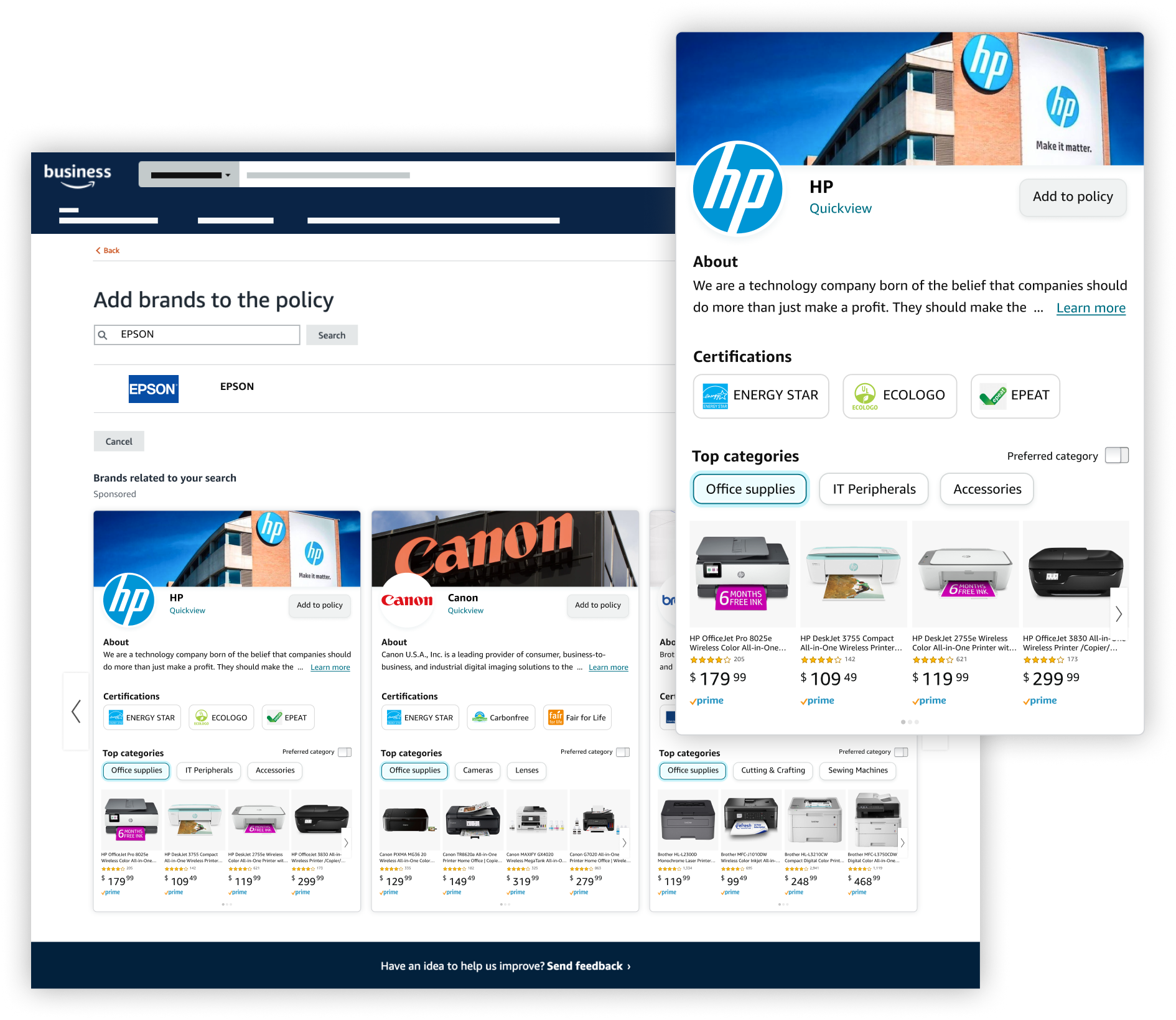
We designed a lightweight ads-widget experiment deployed directly on the Preferred Brand policy page:
- Reused the existing Sponsored Brand ad widget format, staying aligned with Amazon Ads guidelines.
- Returned sponsored brand recommendations sharing common attributes with the searched categories.
- Provided side-by-side brand comparison so buyers no longer needed multiple tabs.
- Integrated recommendations directly into the policy-creation workflow — discovery happens where the decision happens.
Outcomes
Discovery built into the workflow.
The lightweight widget approach enabled customers to discover alternative brands during policy setup — addressing both the usability friction buyers complained about and the low adoption rate of Preferred Brand policies, while opening a new discoverability surface for sellers.